
I don’t know if it was the first presidential debate or the appearance of 10 Pound packs of fun sized candy at Target that scared us all into Halloween season, but here it is. Regardless of your candidate choice, there are plenty of boos to go around here in Philadelphia. So let’s free the skeletons locked in the Philly closet.
By US standards, Philadelphia is one of the oldest cities, founded in 1682. Philadelphia has the makings of a steroid infused, marathon- style school trip. Independence Hall (that housed the continental congress and saw the signing of the Declaration of Independence), the Liberty Bell, and the birthplace of Mother’s Day are all walking distance from each other. The first HBCU, Cheyney University, saw its founding here in 1837 as “The Institute for Colored Youth.” If doing an audio tour of the Constitution Center armed with a water bottle and fanny pack is your version of a nightmare, I’ve got something for you.
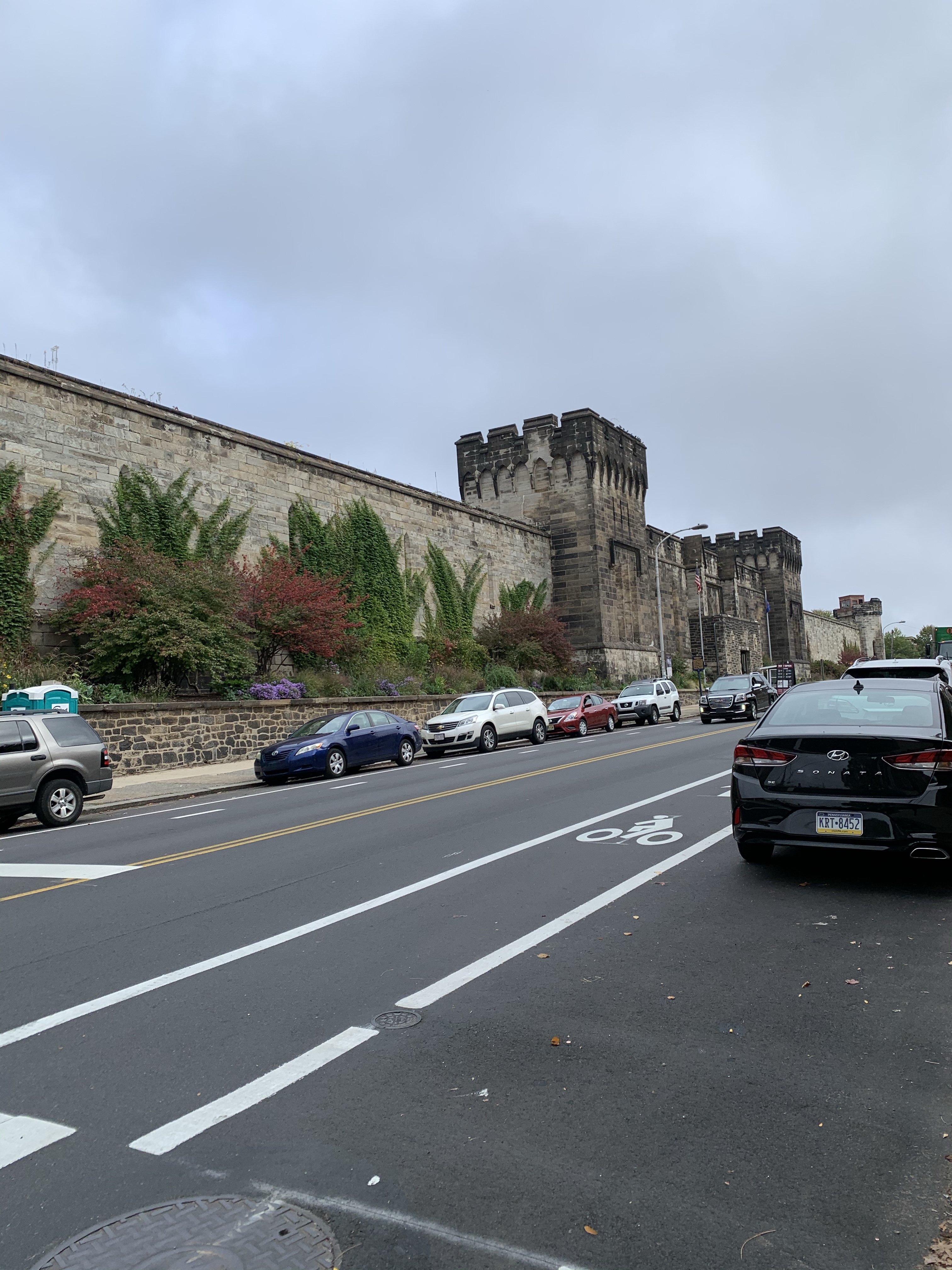
Since 1821 one of the main tourist attractions in Philadelphia also happens to be its scariest.
The Eastern State Penitentiary.
The architect, John Haviland, postulated that a building which instilled fear in the hearts of those that gazed upon it’s imposing Gothic castle inspired walls, was in itself, a deterrent to crime. At the time, it was located two miles outside of the city. No one could really see it in this remote and isolated location which perhaps prevented would be criminals from being scared straight.
It filled up immediately.


It wasn’t long before it got the attention of that Metrosexual man about about town, Benjamin Franklin. He and Dr. Benjamin Rush formed the “Philadelphia Society for Alleviating the Miseries of Public Prisons” which is still in tact today as the “Pennsylvania Prison Society’ which promotes correctional reform and social justice. Back then it was more about keeping them alive in prison long enough to fulfill their sentences.
In its day ESP was a tourist attraction. In 1836, it had sophisticated plumbing and sewage systems, and was equipped with the latest rage in building- central heating. It was an equal opportunity place to get locked up housing men, women, and children. A dog, Pep, was even incarcerated for killing a chicken owned by the governor’s wife. Other than the fact that prisoners were basically kept in isolation and not allowed to talk, this was the swankiest apartment building in town. Each cell had a personal gym known then as an “exercise patio.”
In 1858, 10,000 visitors came to gawk at the inmates. I find this fact fascinating given that travel at the time involved loading a wagon and buckling in the horses for a five day journey. Of course, they didn’t have iPhones to keep themselves entertained so it makes sense.

Word spread among the French that the sophisticated US penal system had advantages over rounding people up and chopping off their heads. Gustave de Beaumont and Alexis de Tocqueville visited in 1831 with much pomp and circumstance. A humorous fictionary telling of their visit is in the book ” Parrot and Olivier in America” by Peter Carey.
Charles Dickens, a man who’s ideal vacation consisted of visiting insane asylums and prisons, claimed seeing the Eastern State Pen and Niagara Falls were his two reasons for coming to the US in 1842.
It was all fun and games until around 1900. Al Capone’s visit lasting from 1929-1930 created a more menacing culture inside the walls. Scarface had an office cell next to the guard station yet separate from the other inmates. This is what is believed to be the VIP cell.
The layers of paint reflect the tastes of the various occupants.
It closed in 1970 and was literally left to rot. It looks today like the last guard locked the door with everything still inside and walked off whistling. Nature took over as the caretaker, ceilings fell in, and trees grew in the cells. No sound except the shuffling of ghosts in black striped outfits.
The current fright meter for the Eastern State Penitentiary is somewhere between spending the night in the Amityville horror house and taking my mother to the knit shop. “Terror Behind the Walls” has been a Philadelphia Halloween staple for years, scaring teenagers in to sleeping with the lights on for a month or so. COVID has robbed me of this parental pleasure.
I went on a Friday morning. It was just me and two other couples that day. Gave it that “Don’t accidentally get locked in – no one will hear your screams” vibe.
So, turn off the lights, light a candle, and let’s go…..


One of the blocks has several artist installations.


Two blocks away from the Pen I ran across this beautiful haunted house mansion. I guess land must have been pretty cheap. Probably nouveau riche. SMH.
Click here for Virtual Tour info- make a reservation for a group tour.
For a feel of the place, link to the Online tour here
Ok sidenote- have any of you done a live virtual tour? I’ve seen some offered for many of the historical European sites and am thinking about doing one….. Please let me know if you’ve got a recommendation!







 Geese will hunt you down with more ferocity than a herd of pointy tusked javelinas. The man in the situation above was lucky. He found refuge in a bathroom before the nesting geese tore him limb from limb. Every time he tried to escape they chased him back in. They even hissed and spit at the Border Collie let loose to shoo them away. He was lucky that I didn’t take a picture of him quaking in his running shoes as the firemen conducted the nail-biting rescue. Believe me Jalen, after a few seasons here, you’ll be less afraid of running a quarterback draw through the one hole when the defense is showing a double A Gap Blitz than an 8- pound Canada Goose.













 Hey from Japan- or wherever the moving van arrives- Emily Cannell
